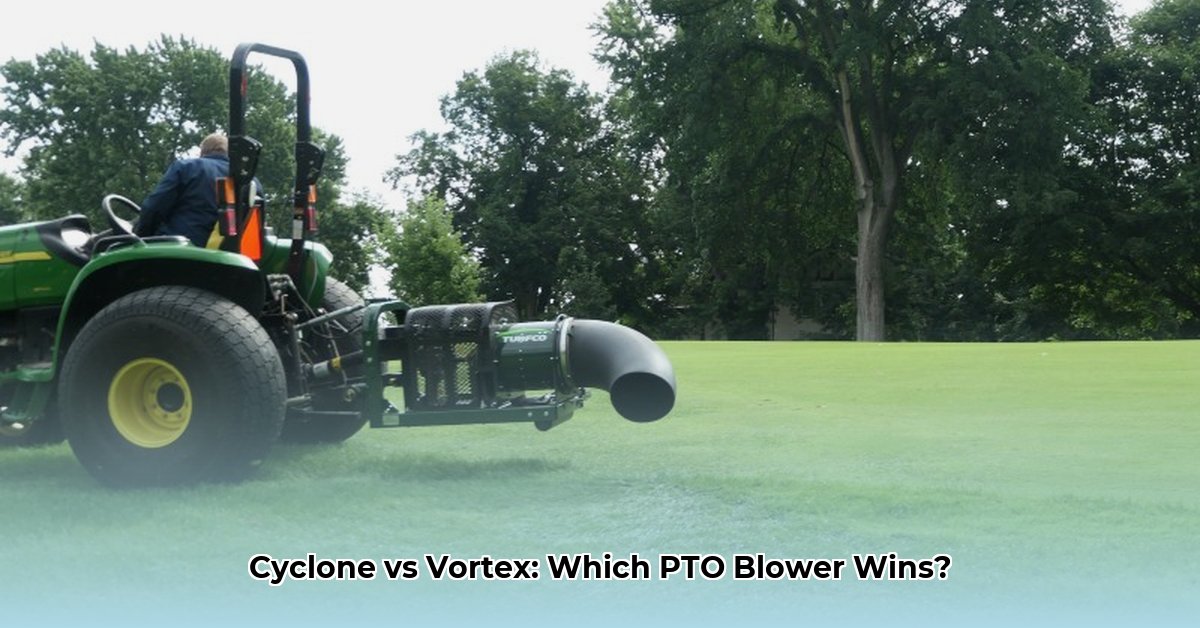
Cyclone PTO vs. Votex B20: A Comparative Review
Choosing the right PTO (Power Take-Off) blower for your tractor is a significant investment. This comparative review analyzes two leading contenders—the Cyclone PTO and the Votex B20—to help you make an informed decision. We'll examine their specifications, performance capabilities, and suitability for various applications. For more on PTO systems, see this helpful guide.
Product Overviews: Cyclone PTO and Votex B20
Both the Cyclone PTO and the Votex B20 offer powerful solutions for clearing debris, snow, and spreading materials. However, they cater to different needs and priorities.
Cyclone PTO: This blower is marketed as a lightweight, efficient choice, ideal for speed and maneuverability. Its relatively compact size is advantageous in tighter spaces or on sensitive terrain.
Votex B20: While weight isn't specified, the Votex B20 emphasizes power and durability, making it suitable for larger-scale clearing operations. Its adaptable design suggests superior versatility across various tasks and tractor setups. The manufacturer's website highlights its efficient design and ability to handle heavy-duty applications. https://votex.com/en/products/blowers/pto-blower-b20
Head-to-Head Comparison: Key Features and Specifications
This table compares the Cyclone PTO and Votex B20 across several critical factors. Note that some data remains unavailable from manufacturers' specifications, limiting a direct comparison in certain aspects.
| Feature | Cyclone PTO | Votex B20 | Notes |
|---|---|---|---|
| Power Requirement | 20-25 HP | 20+ HP | Both require a tractor with substantial horsepower. The exact horsepower needs may vary depending on the model and application. |
| Weight | 240 lbs | Unspecified | Cyclone's lighter weight suggests improved maneuverability; Votex B20's weight is unknown and could affect maneuverability. |
| Airflow (CFM) | Not specified | Not specified | The absence of CFM (cubic feet per minute) data prevents a direct airflow comparison. This is a critical missing data point. |
| Gearbox | Direct-drive | Unspecified | Cyclone's direct-drive system may simplify maintenance and reduce potential points of failure. |
| Nozzle Control | 360° | Rotatable blow funnel; adaptable mounting | Cyclone provides precise directional control; Votex offers more versatile application options via adaptable mounting. |
| Anti-Scalping Roller | Yes | Unspecified | An anti-scalping roller on the Cyclone protects surfaces during blowing operations. |
| Warranty | 10 years | Unspecified | Cyclone's 10-year warranty suggests confidence in its durability. Warranty information for the Votex B20 is lacking. |
| Price | Unspecified | Unspecified | Pricing information is unavailable for both models. Prices will likely vary depending on the dealer and specific configurations. |
Real-World Performance and User Feedback
While comprehensive performance data is limited, anecdotal evidence suggests that the Cyclone PTO excels in speed and fuel efficiency for smaller jobs, while the Votex B20 might be preferred for more demanding tasks requiring greater power. Further independent testing is needed for definitive conclusions.
Use Cases and Recommendations
Cyclone PTO: Best suited for applications requiring maneuverability and speed, such as clearing smaller areas, orchards, or vineyards. Its lightweight design makes it easier to navigate tight spaces.
Votex B20: Ideal for larger-scale operations requiring significant power and adaptability. Its versatility makes it a strong choice for a wide range of debris-clearing tasks.
Conclusion: Choosing the Right Blower
The "best" blower depends entirely on your specific needs and operational context. The Cyclone PTO prioritizes speed and maneuverability for smaller jobs, while the Votex B20 emphasizes robust performance for larger, more demanding applications. The lack of available data, particularly regarding airflow, necessitates further research before making a final decision. Always consult with equipment specialists and consider thorough research into specific models.
Risk Assessment and Regulatory Compliance
Both machines involve inherent risks associated with heavy machinery. Safety precautions, proper training, and regular maintenance are crucial for safe operation. Compliance with all relevant local and national safety regulations is mandatory.